

There are moments when everything feels like too much.
I meet people who tell me they feel overwhelmed by their thoughts, their emotions, or their bodies — and often by all three at once. In those moments, even small things can feel impossible. Thinking clearly disappears. Trying to “pull yourself together” only makes it worse.
What I want to say clearly is this:
emotional overload is not a personal failure.
It is a nervous system response.
Emotional overload is not weakness
When emotional overload happens, the nervous system is carrying more than it can process at once. This is especially common in people who have lived through difficult or overwhelming experiences earlier in life — particularly when safety, understanding, or emotional support were limited.
In overload:
- the body moves into protection
- the nervous system prioritises survival
- reasoning and analysis become much harder
This isn’t because you’re doing something wrong.
It’s because your system is asking for safety, not solutions.
Why “trying harder” doesn’t help
Many people have been taught to cope by:
- pushing through
- analysing their feelings
- staying positive
- distracting themselves
While these approaches can help in mild stress, they often don’t work in emotional overload. In fact, they can increase shame and exhaustion.
When the nervous system is overwhelmed, logic cannot reach it.
What helps first is the body — not the mind.
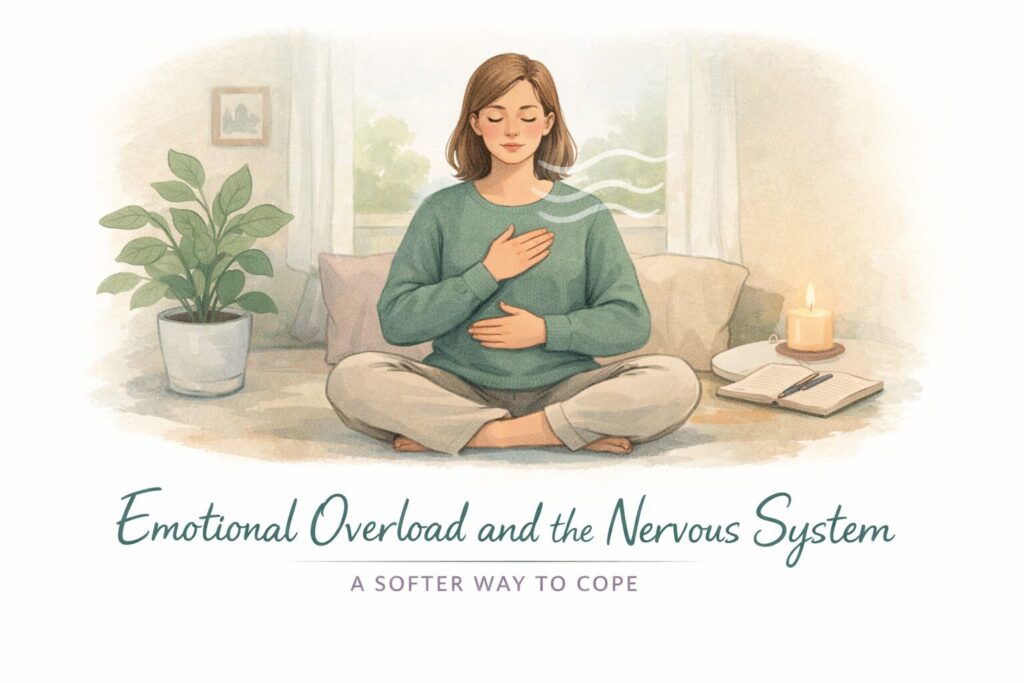
A softer way to cope
In my work, I take a nervous system–informed approach. That means starting from one simple principle:
Regulation comes before understanding.
Before asking why you feel this way, the body needs help slowing down. Gentle actions — such as slowing the breath, grounding attention in the present moment, reducing stimulation, and speaking kindly to yourself — can signal safety to the nervous system.
These are not techniques to “get rid” of emotions.
They are ways of helping the system settle, so emotions no longer need to overwhelm you to be noticed.
Practical support for difficult moments
Because emotional overload makes thinking difficult, I believe support needs to be clear, simple, and practical — something you can use in the moment, without having to remember theory or explanations.
That’s why I created a short, printable guide called:
“5 Effective Ways to Cope with Emotional Overload”
It offers:
- step-by-step actions you can follow when you feel overwhelmed
- body-based ways to help your nervous system slow down
- gentle language that supports rather than pressures
It’s designed for moments when thinking clearly isn’t possible — and support needs to be immediate.
When emotional overload is frequent
If emotional overload happens often, it can point to deeper patterns formed earlier in life — times when your system had to cope without enough safety or support.
Psychodynamic hypnotherapy works gently with these patterns, helping the nervous system learn regulation with support, rather than through effort or force.
You are not broken.
Your system adapted — and it can learn again.