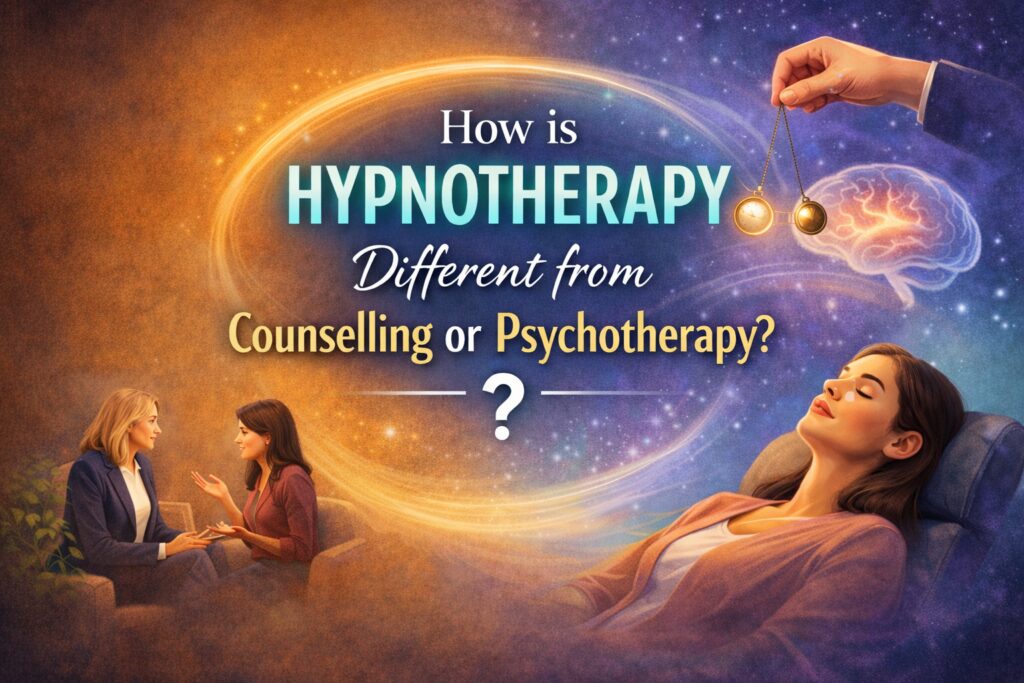
Hypnotherapy is different from counselling and psychotherapy mainly in how change happens: it works with the subconscious mind through focused attention and imagery, rather than relying primarily on talking, analysis, or insight alone.
If you’re exploring support for anxiety, trauma, habits, or emotional patterns, it’s natural to wonder which approach is right for you. Counselling, psychotherapy, and hypnotherapy all aim to reduce suffering and support growth—but they work in distinct ways, and they suit different people at different times.
This article gently unpacks those differences, so you can choose with clarity rather than confusion.
Counselling and psychotherapy are talk-based therapies. Their primary tools are conversation, reflection, and the therapeutic relationship itself.
In these approaches, change often happens through:
Exploring thoughts, emotions, memories, and relationships
Making sense of past experiences
Developing insight into patterns and behaviours
Building emotional awareness and regulation
Experiencing a safe, attuned relationship that allows repair
Psychotherapy tends to go deeper and longer-term than counselling, often working with:
Early attachment wounds
Trauma and complex emotional patterns
Identity, meaning, and long-standing difficulties
For many people, being heard, understood, and emotionally met is profoundly healing.
Insight and awareness can gradually reshape how life is experienced.
Limitations for some clients: While talking therapies are powerful, some people find that:
They understand why they feel a certain way, but still feel stuck
Emotions or symptoms persist despite insight
Talking alone doesn’t reach the deeper, wordless layers where patterns formed
This is often where hypnotherapy offers something different.

Hypnotherapy works with the subconscious mind—the part of us that stores emotional learning, habits, bodily responses, and automatic reactions.
In hypnotherapy, you are guided into a state of focused attention (often described as deep relaxation). In this state:
The mind becomes less analytical and more receptive
Imagery, metaphor, and felt experience become primary
Emotional memories can be accessed safely and gently
New responses can be introduced at a deeper level
Importantly, you remain aware and in control. Hypnosis is not sleep, and it is not mind control. It is a natural state similar to being absorbed in a book, music, or daydream.
Change in hypnotherapy often feels:
Faster and more experiential
Less effortful
More embodied and emotional rather than intellectual
Many clients say, “I didn’t just understand it—I felt it shift.”

A helpful way to see the difference is this:
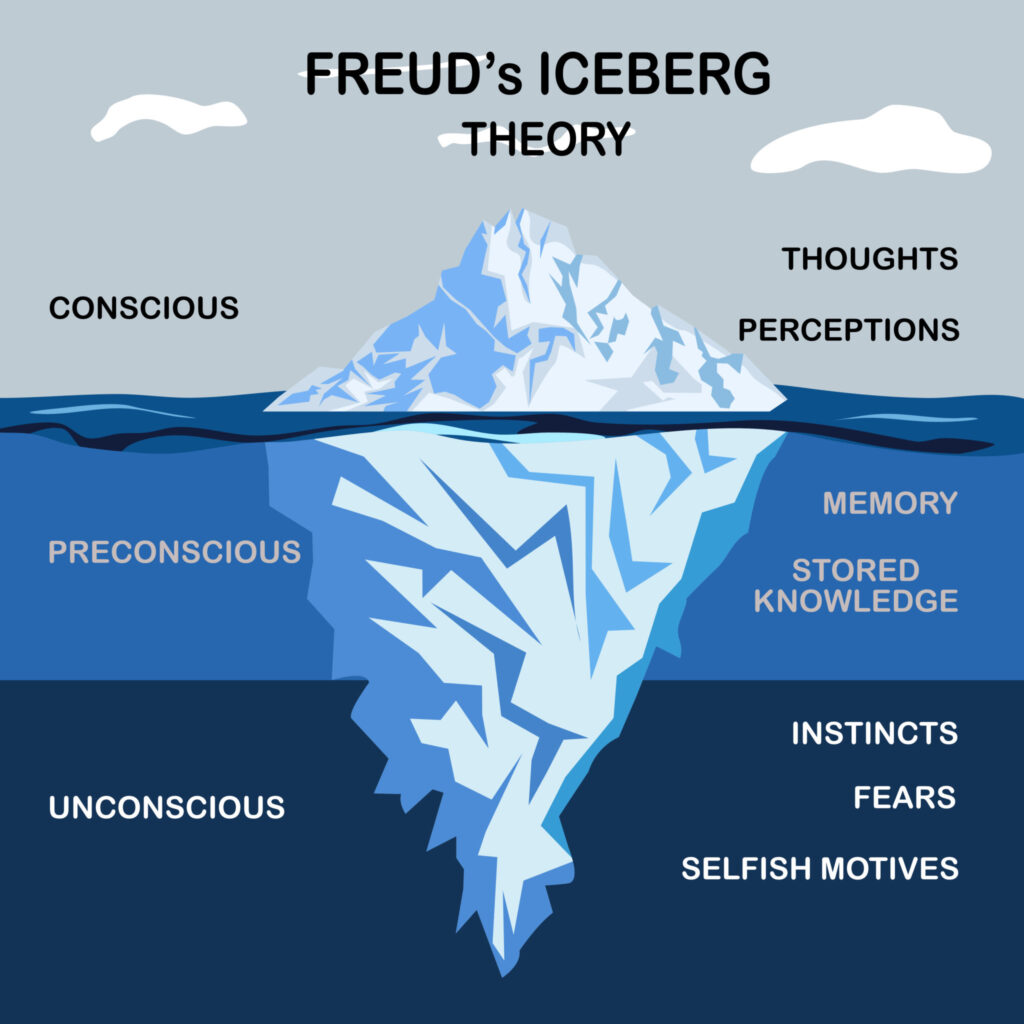
Counselling & psychotherapy primarily work with the conscious mind first—thoughts, stories, meanings—and allow change to trickle down over time.
Hypnotherapy works bottom-up, engaging emotional memory, imagination, and the nervous system directly.
Neither is “better.” They simply take different routes.
For example:
If you want to talk through a relationship, explore identity, or process grief slowly and relationally, talking therapy may be ideal.
If you struggle with phobias, anxiety, habits, emotional blocks, or trauma responses that don’t respond to logic, hypnotherapy can be especially effective.
Yes—and often beautifully.
Many practitioners (myself included) integrate hypnotherapy with psychodynamic, trauma-informed, or parts-based approaches. This allows:
Talking and reflection where needed
Experiential subconscious work where words fall short
Both insight and emotional resolution
For some people, hypnotherapy feels like “going straight to the root.” For others, it complements the understanding gained through talking therapy.

Modern hypnotherapy—when practised in a trauma-informed way—is gentle, collaborative, and respectful of the client’s pace.
A skilled hypnotherapist:
Does not force memories or emotions
Prioritises safety and nervous system regulation
Works with imagination and symbolism rather than reliving trauma
Adjusts depth and approach according to your needs
In this sense, contemporary hypnotherapy often integrates principles from psychotherapy, neuroscience, and attachment theory—bridging both worlds.
The best approach is the one that matches:
How you process experience
What you’re struggling with
What feels safe and intuitive for you
If you’ve tried talking and feel stuck, hypnotherapy may offer a different doorway.
If you value exploration, meaning, and relationship, counselling or psychotherapy may feel grounding.
And for many, a thoughtful blend is the most effective of all.
What matters is finding an approach that speaks to how your mind and nervous system actually work—not how they’re “supposed” to work.
If you’re curious about hypnotherapy or wondering whether it’s right for you, you’re welcome to explore gently, at your own pace.
HYPNOTHERAPY & COACHING WITH GINTA
REWRITE YOUR STORY AND AWAKEN YOUR BEST SELF WITH HYPNOSIS